Vodun Days

The international vodun festival

Vodun Days

Every year, the Vodun Days bring together in Ouidah the heirs to the vodun faith, artists from across the diaspora, and visitors from all over the world to celebrate spirituality, the arts and remembrance.

Where Ouidah · Benin
When 2–9 January 2027

A week in which the city of Ouidah becomes the world capital of vodun. Ceremonies, concerts, exhibitions, academic forums and parades take place one after the other along the Slave Route, in the temples, on the beaches and all the way to the Gate of No Return.

The Pantheon

Six deities to know about before visiting Ouidah

During the week, you can hear them mentioned in the hymns, and you can recognise their colours and their altars. Here are a few pointers to help you follow the ceremonies.

  1. Legba

    Guardian of the thresholds and messenger of the other deities. His clay figurines stand guard at the entrances to houses and villages: he is the first to be greeted.

  2. Dan

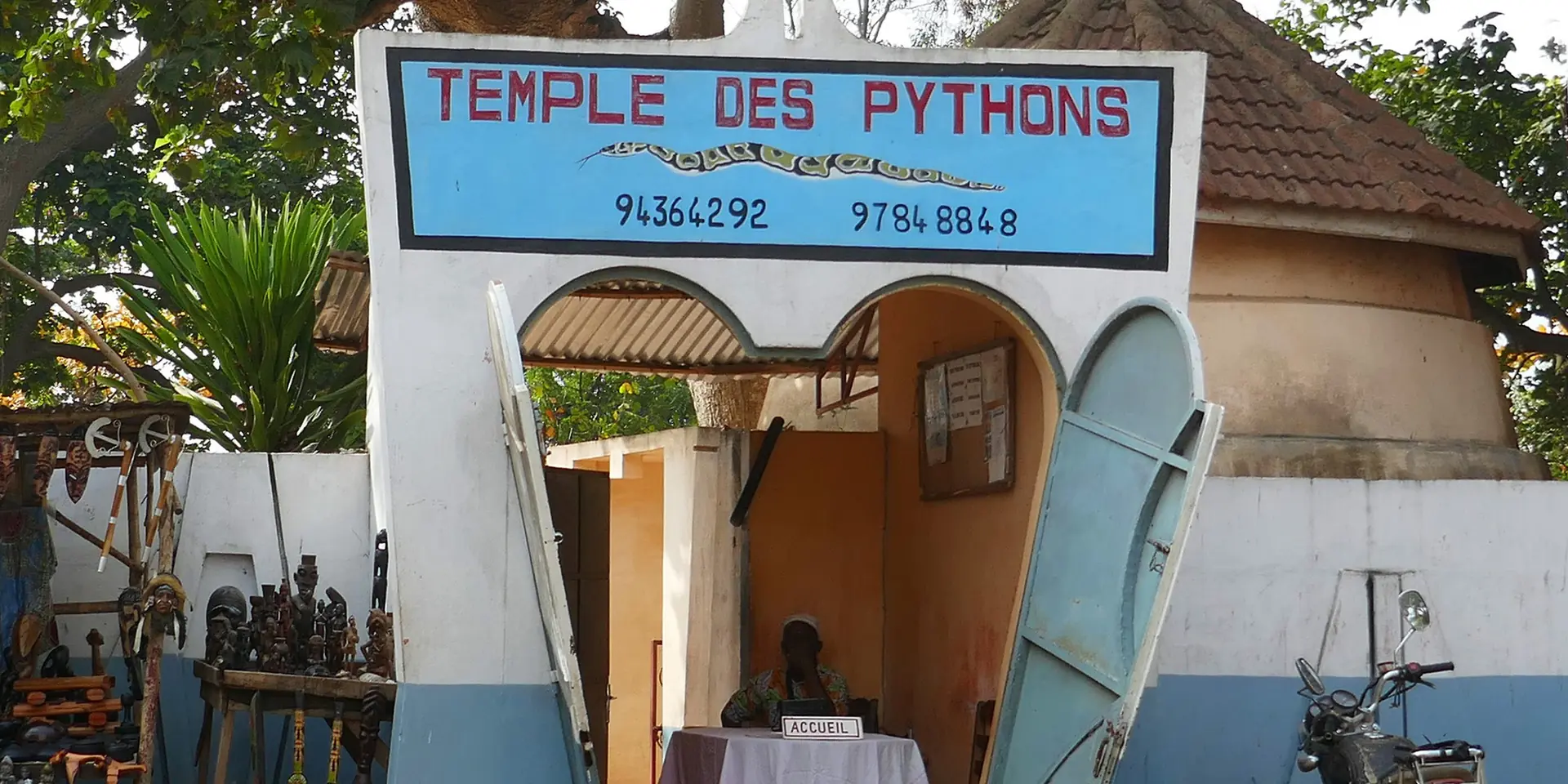
    The rainbow snake, a symbol of continuity and prosperity. At the Temple of the Pythons, opposite the basilica in Ouidah, it has been worshipped for centuries.

  3. Hêviosso

    As the master of lightning and thunder, he punishes lies and injustice. His followers often wear red and white.

  4. Sakpata

    As the deity of the earth, he is invoked to ward off illness. His followers address him respectfully using euphemisms rather than his actual name.

  5. Mami Wata

    Spirit of the waters, associated with the sea, beauty and wealth. Her ceremonies are often held by the sea.

  6. Fa

    The art of divination. The Bokonon read the signs of the Fa to guide a decision or a life choice — a practice that is still widely sought after.

01

A religion, not a show

vodun is not just folklore for tourists. It is a living religion, practised by the majority of Beninese people, and one of the spiritual pillars of the Gulf of Guinea. Vodun Days were created to restore this heritage to its rightful place — by showcasing it as it is actually lived, without caricature, through its custodians and contemporary artists.
02

A week of public ceremonies

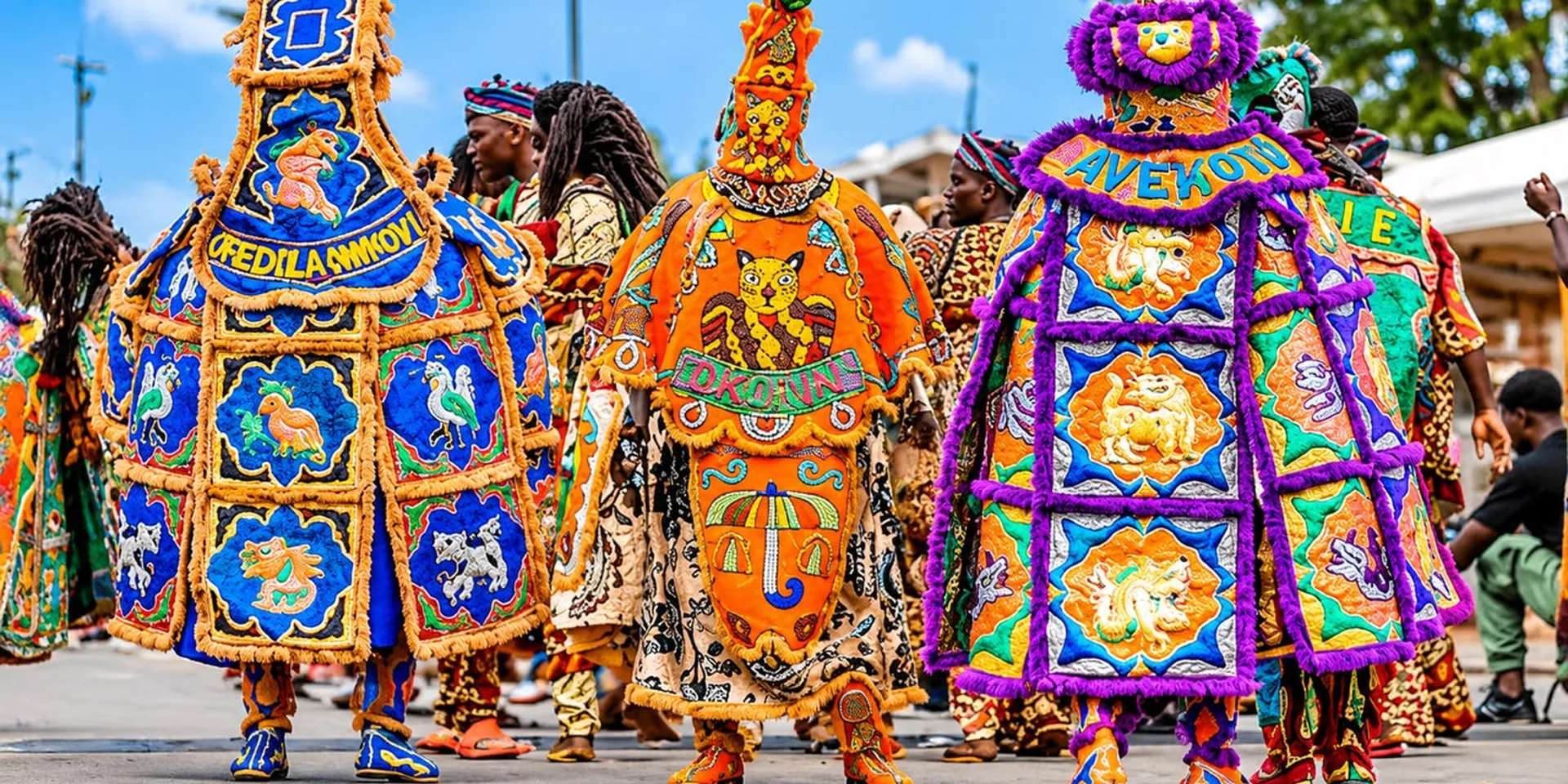
Traditional ceremonies open to the public, Zangbéto and Gèlèdè masked dances, a ‘Flame of Remembrance’ procession from the Portuguese fort to the beach, evening concerts, a market selling crafts and ritual plants, and forums featuring researchers and vodun priests. Each year’s programme is organised around 10 January, National vodun Day.

03

Get to Ouidah

Ouidah is 42 km west of Cotonou, a 45-minute to 1-hour drive along the coastal road. Book your accommodation as soon as the programme is announced: hotels in Ouidah and Grand-Popo fill up very quickly during the week. Dahomey Discovery organises immersive holidays for the entire duration of the festival.

6–8 programme days
2019 year of establishment
40+ countries represented
10 Jan. National Day

The route

Places of remembrance

From the old fort to the beach, Ouidah is best explored on foot. These four stops provide an overview of the ceremonies.

Fort portugais

Portuguese fort

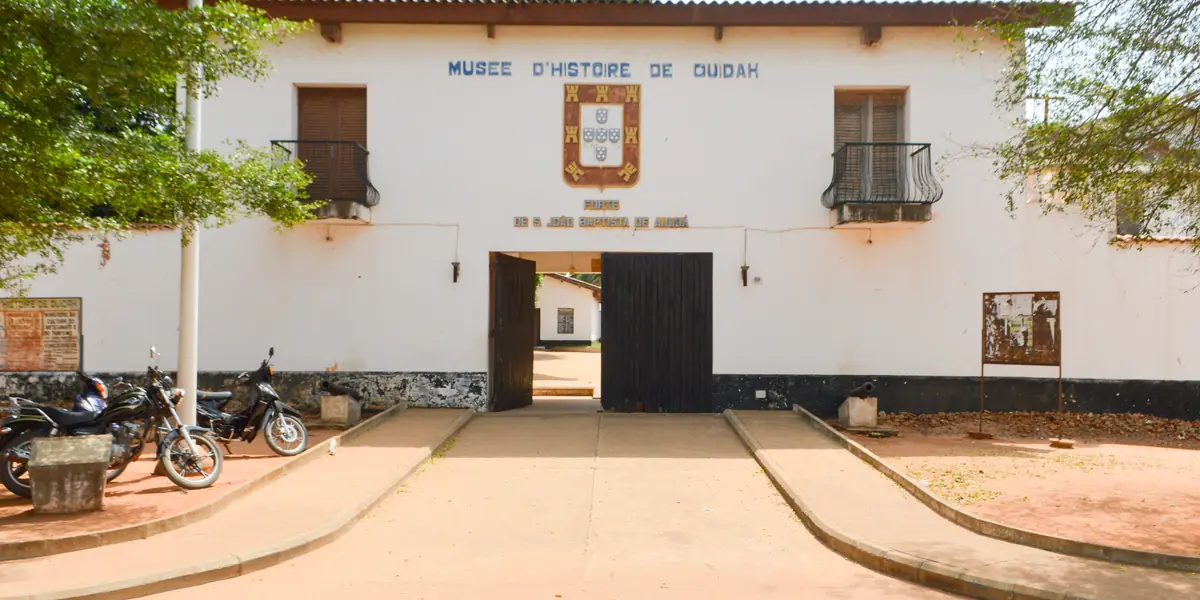
The symbolic starting point of the Remembrance Parade. A former slave-trading post converted into a museum.

Route de l'Esclave

The Slave Route

Four kilometres dotted with symbolic landmarks between the town and the sea.

Porte du Non-Retour

Gate of No Return

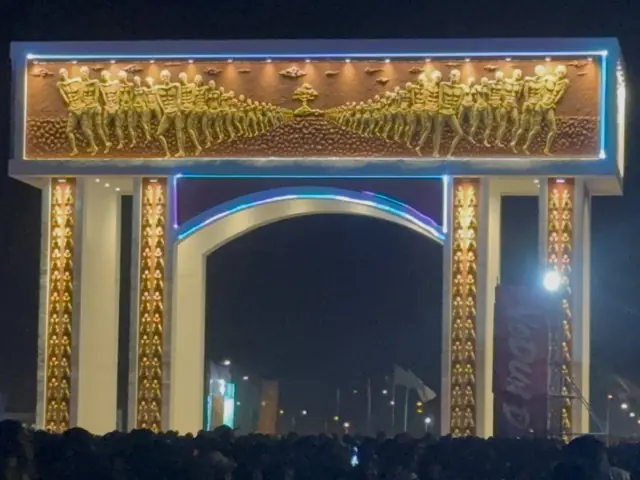
Monument on the beach. Large closing ceremony facing the ocean.

Forêt sacrée de Kpassè

The Sacred Forest of Kpassè

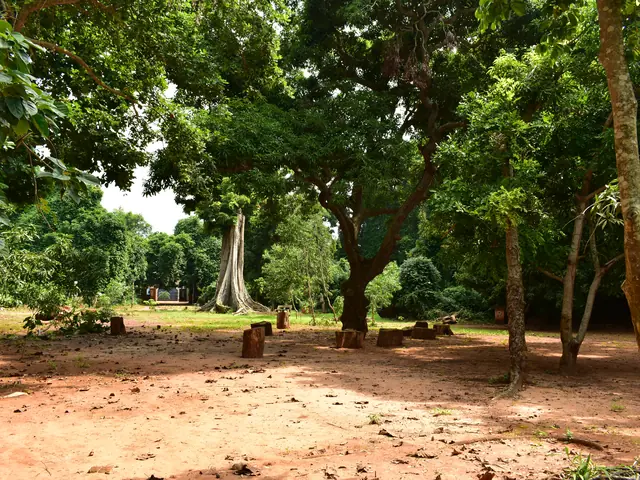
Statues and sacred trees where ceremonies are held throughout the week.

Day after day

Seven days, five unmissable moments

From the opening right through to National Day on 10 January, the city takes on a different atmosphere every day.

01
Wave 1 · Monday

Official opening

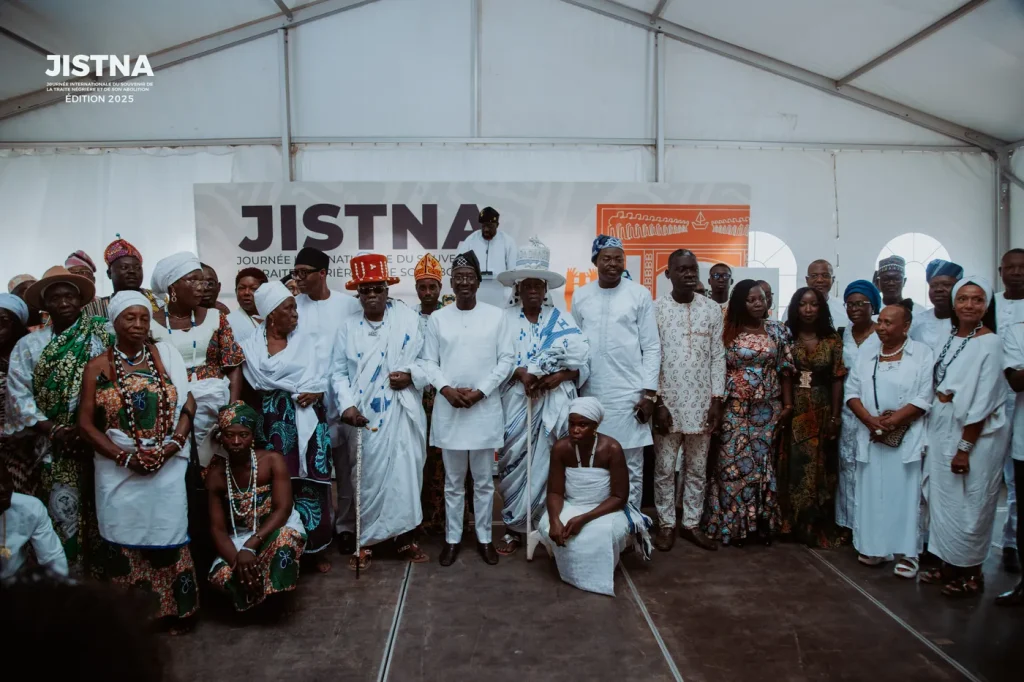
Speeches by traditional and state authorities, a welcome to the foreign delegations, and the lighting of the flame of remembrance.

02
Wave 2 · Tuesday & Wednesday

Dances and the removal of masks

Gèlèdè by day, zangbéto by night. Codified chants, drums echoing through the neighbourhoods.

03
Wave 3 · Thursday

Memorial parade

A silent march from the town to the beach, with stops at symbolic locations.

04
Wave 4 · Friday & Saturday

Music scenes

Traditional music with a contemporary twist, vodun-inspired jazz, mixed choirs. The full programme is announced in advance on the official website.

05
Wave 5 · 10 January

Grand closing ceremony

Final gathering on the beach. A ritual dip may take place, followed by a collective offering and a final song by the officiants.

Your week

A typical week in Ouidah

The programme varies from one year to the next: please check the dates on the official website before booking.

  1. Day 1 Portuguese fort

    Arrivals & Official Opening

    Opening ceremony with traditional leaders, speeches, and the lighting of the flame of remembrance.

  2. Day 2–3 City of Ouidah

    Masks in stock

    Hiking in the daylight, zangbéto by the light of storm lanterns at night. Precise ritual codes; a local guide is recommended.

  3. Day 4 Ouidah → beach

    The Slave Route

    A commemorative march covering the 4 km between the city centre and the Gate of No Return. Stops at symbolic locations.

  4. Days 5–6 Venues & stages

    Forums & concerts

    Round-table discussions during the day with researchers and vodun priests, and evening concerts combining traditional music with contemporary acts.

  5. 10 January Ouidah Beach

    National vodun Day

    Grand closing ceremony. A ritual swim in the ocean for those who wish to take part, followed by a collective offering on the beach.

On the streets

The atmosphere in Ouidah during the week

Ouidah takes on a new look for the Vodun Days. The streets of the historic centre fill with the sound of percussion, family temples open their doors to visitors of good faith, and the scent of incense and burnt leaves wafts over the town. At night, the Slave Route is lit up by torches, and on the beach, the silhouette of the Gate of No Return can be seen glimmering in the distance.

  • Drumming and singing from late afternoon in the lower town
  • Family ceremonies open to all who wish to attend; white attire is recommended
  • A memorial march stretching several kilometres between the town centre and the beach
  • Final gathering on the sand — a ritual bath for those who wish to take part

Respect for religious beliefs

Before entering a ceremony

vodun is a living religion: a few simple gestures open doors rather than close them.

Attire

White is recommended for ceremonies. Shoulders must be covered within ritual precincts.

Photo

Always ask for permission before taking a photograph of someone wearing a mask or in a trance.

Payment

Make sure you have some cash (CFA francs). Few shops accept cards in Ouidah.

Weather

Dry season. 30 °C during the day, 22 °C at night. A hat and sun cream are essential.

Transport

A chauffeur-driven car is recommended: the attractions are scattered throughout the town and out towards the beach.

From 10 January to the Vodun Days

vodun has been recognised as the national religion since 1997. 10 January was subsequently declared a public holiday, but for a long time the event remained confined to Ouidah and its temples. A broader framework was needed to show that vodun is more than just a romanticised image — it is a living, contemporary practice, engaged with the arts and science.

Vodun Days was launched in 2022 with this ambition in mind. Over the course of three editions, the event has established itself as the leading international gathering for vodun, with a programme that combines rituals, academic forums and works by contemporary artists from Benin and its diaspora.

In Ouidah

On location in Ouidah

Eating

A maquis near the Place du Souvenir. Affordable Beninese cuisine, braised fish and akassa.

Safety

Ouidah is quiet, but pickpockets can sometimes be hidden amongst the crowds. Keep your bag zipped up and your mobile in an inside pocket.

Accessibility

Sandy and rough tracks along the Slave Route. Not particularly suitable for wheelchair users without an accompanying person.

Payment

Cash is the priority (CFA francs). There is a BOA cash machine at the entrance to the town, which is often out of cash during the event.

After the week

Ouidah and the coast, as well

The coastline between Cotonou and Grand-Popo forms a natural extension of the vodun week.

The Zinsou Foundation Museum

An hour’s drive from Cotonou. Three floors dedicated to contemporary African art — the perfect complement to vodun week.

Grand-Popo, 40 mins away

Beaches, mangroves, charming hotels. Ideal for a breather between two days in Ouidah.

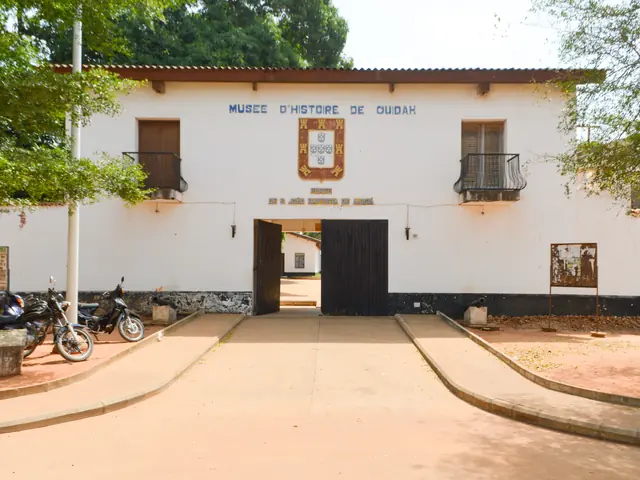
The Ouidah History Museum

Housed in the Portuguese fort. A room dedicated to the slave trade and the kingdoms of the Gulf.

The Temple of the Pythons

Opposite the basilica — a short but memorable visit, a living symbol of urban vodun.

Before you set off

Your questions about Vodun Days

Do you need an invitation to attend the ceremonies?

No — most public events are open to everyone. Only certain initiation ceremonies remain restricted to initiates.

Can we bring children?

Yes, the daytime events are suitable for families. The evening mask-themed events are more intense — best left to teenagers and adults.

Is photography permitted?

It is permitted on public stages and at fashion shows. It is forbidden or discouraged in temples and during ritual trances. Always ask first.

How many days should I allow?

A 4-day trip centred around 10 January gives you the chance to experience the key moments. A whole week if you want to see everything.

Can we come without booking?

No. Ouidah is fully booked from November onwards. Book your accommodation and guide as soon as the programme is announced.

The same season

January in Benin: things to do

These events are part of the same season or theme. They are best experienced as part of the same trip.

Plan your stay

Experience Vodun Days with Dahomey Discovery

Every year, our team organises bespoke tours during the event — including airport pick-up, accommodation, transport, a French-speaking guide and access to the programme’s key events.