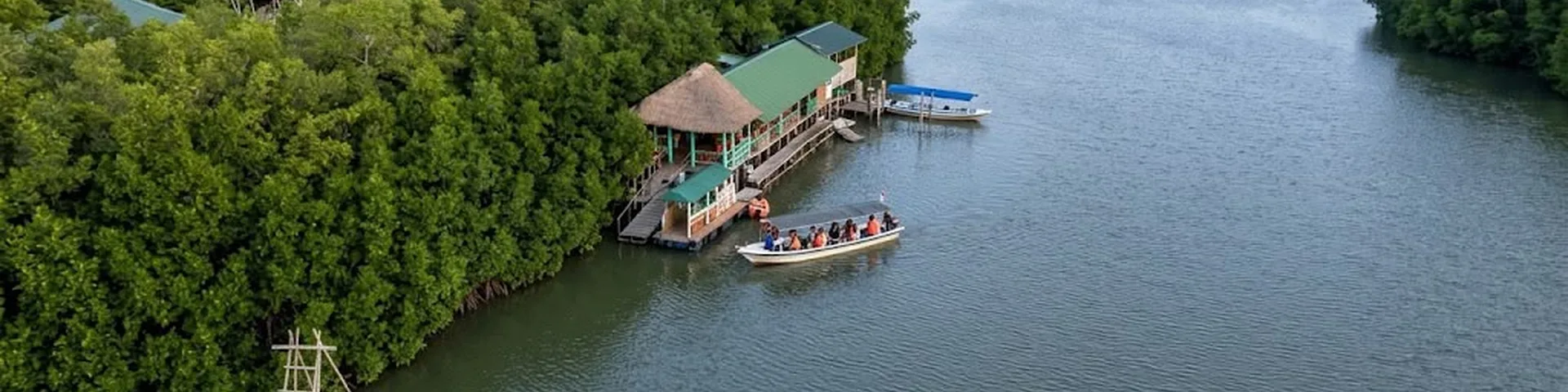
Two national parks in the north of the country: PendjariNational Park (2,755 km²) and W National Park (the Beninese part of the complex shared with Burkina Faso and Niger). Both have been listed as a UNESCO World Heritage Site since 2017 under the name W-Arly-Pendjari Complex. It is one of the last great wilderness areas in West Africa.
Pendjari is the most popular destination: it is better equipped with tracks, camps and park rangers’ posts. The Benin section of the park is more remote, wilder and more difficult to access. Both can be visited from Natitingou or Tanguiéta, a convenient gateway to the north.
What you can see there
Elephants, buffalo, hippopotamuses, Buffon’s cobs, hippotragues, oryx, warthogs, baboons, mongooses… Pendjari is home to one of the last remaining populations of West African lions (a critically endangered subspecies) — sightings remain rare but are possible. As for birds, more than 460 species have been recorded, including numerous Palaearctic migratory birds during the dry season.
Cheetahs, which used to be found here, have disappeared from the complex; wild dogs are occasionally sighted there. Wildlife can be spotted at dawn and in the late afternoon around the remaining waterholes.
Hiking in Atacora
As well as safaris, the Atacora mountain range is ideal for walking: stepped paths around the Tanougou Falls, a climb up the Boukombé hills to watch the sun set over the Betammaribé region, and circular walks around Perma and Kouaba to meet the tata somba people. Allow two to four hours for most of the trails, accompanied by a local guide who is familiar with the protocols for entering the villages.
When to go, how to prepare
The dry season, from November to May, is the only time of year when the parks are accessible: the tracks are open, the low vegetation makes the wildlife visible, and night-time temperatures drop (which is welcome when camping). During the rainy season, the parks are closed.
You will need: a 4×4 vehicle (hired with a driver), a park entry permit (to be obtained at the entrance or through a tour operator), modest clothing in neutral colours, closed-toe shoes, binoculars, an insecticide-treated mosquito net for nights in the bush, and up-to-date anti-malarial treatment.
Bonne Arrivée uses cookies to improve your experience, measure website traffic and provide you with tailored content. You can accept, refuse or customise these settings at any time.
Essential cookies
Essential for the website to function (navigation, language). Always active.
Still active
Audience measurement
Anonymous visitor statistics to improve the most frequently viewed pages.
Third-party content
Videos, maps and social media posts embedded from external services.
Your preferences are stored on this device for 12 months. Please see our privacy policy.