Wave 1 · Day 1
Prayers & arrivals
Collective prayers at the Grand Mosque, the arrival of vassal delegations, and the presentation of gifts at the palace.
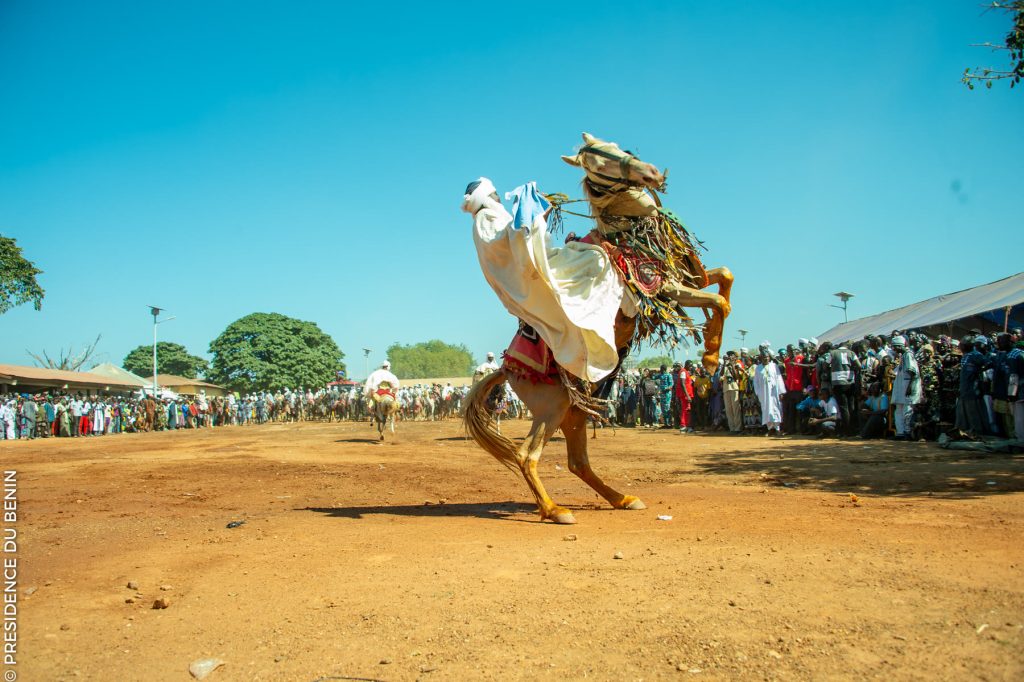
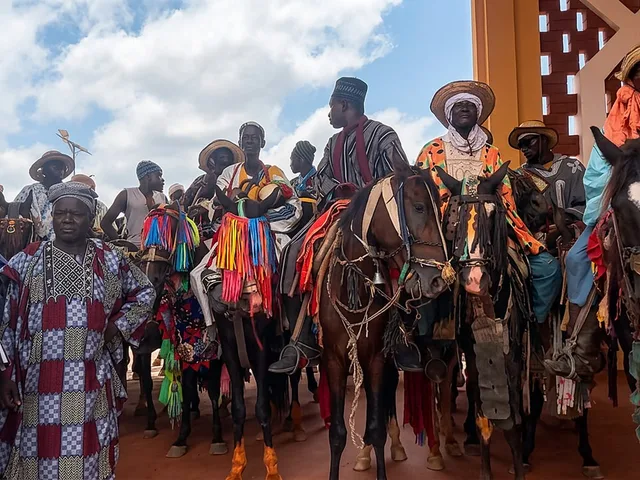
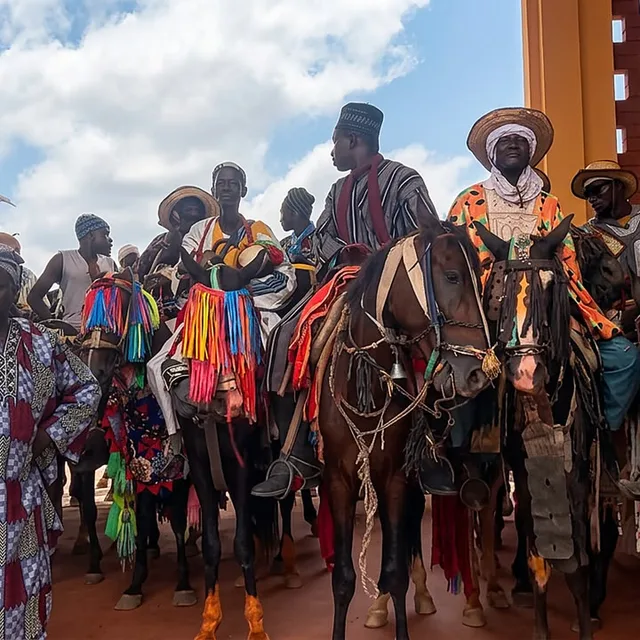
Every year, Nikki hosts one of West Africa’s most spectacular shows: the Gaani. Hundreds of horsemen in regal attire, sabres drawn, blowing horns made of horn, with golden dust glistening in the evening light. A unique glimpse into Baribara royalty, which has been thriving for eight centuries.
The Gaani commemorates a seminal military victory which, in the 12th century, cemented the structure of the Kingdom of Nikki: a sultan at the helm, with vassal chiefs who swear an oath of allegiance each year. The ceremony has never been interrupted. It has endured through trans-Saharan trade, French colonisation and Benin’s independence, without losing either its meaning or its form.
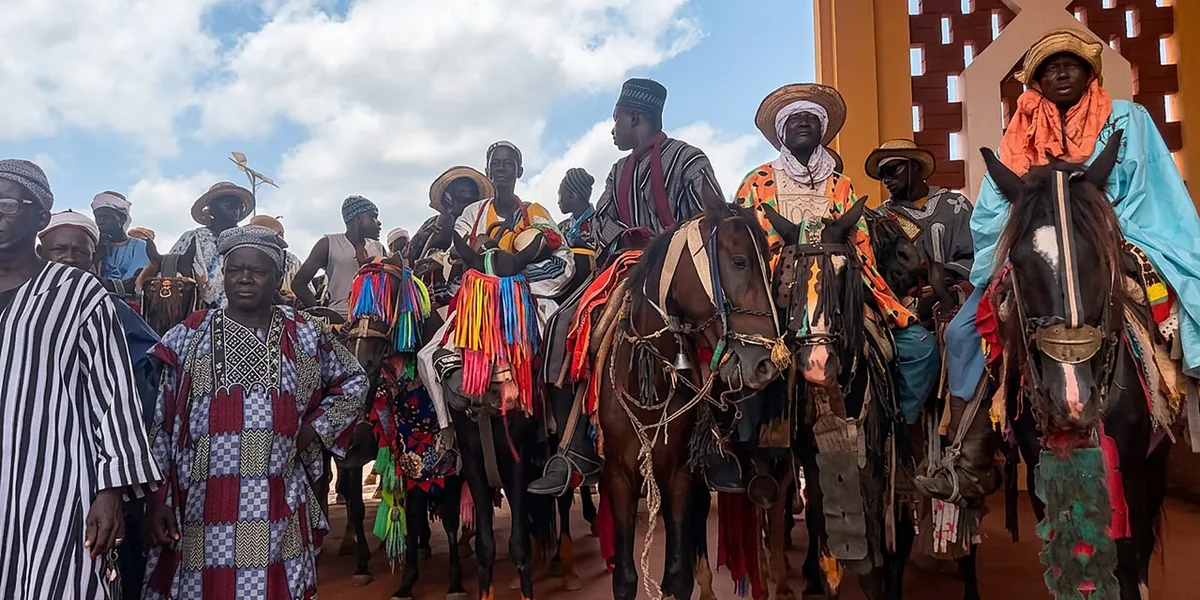
What sets Gaani apart from other major festivals in West Africa is its eight-century-long continuity. The horsemen parading through the streets are not merely re-enacting a tradition — they are living it. Their tunics, their sabres, the colour of the fabrics draped over the horses: every detail signifies a position within the kingdom’s hierarchy.
Party vocabulary
A few words overheard here and there in Nikki during the festival, amidst the speeches, songs and parades.
Three days in Nikki
The festivities culminate in the horsemen’s parade, followed by banquets, demonstrations and a market.
Collective prayers at the Grand Mosque, the arrival of vassal delegations, and the presentation of gifts at the palace.
The Sultan emerges from beneath a canopy, accompanied by horsemen in ceremonial dress and the singing of the griots. This is the highlight of the festival.
Communal meals in the settlements, war dances, and music played on horn trumpets until the middle of the night.
Archery competition, horse dressage, sabre drills. Suitable for families.
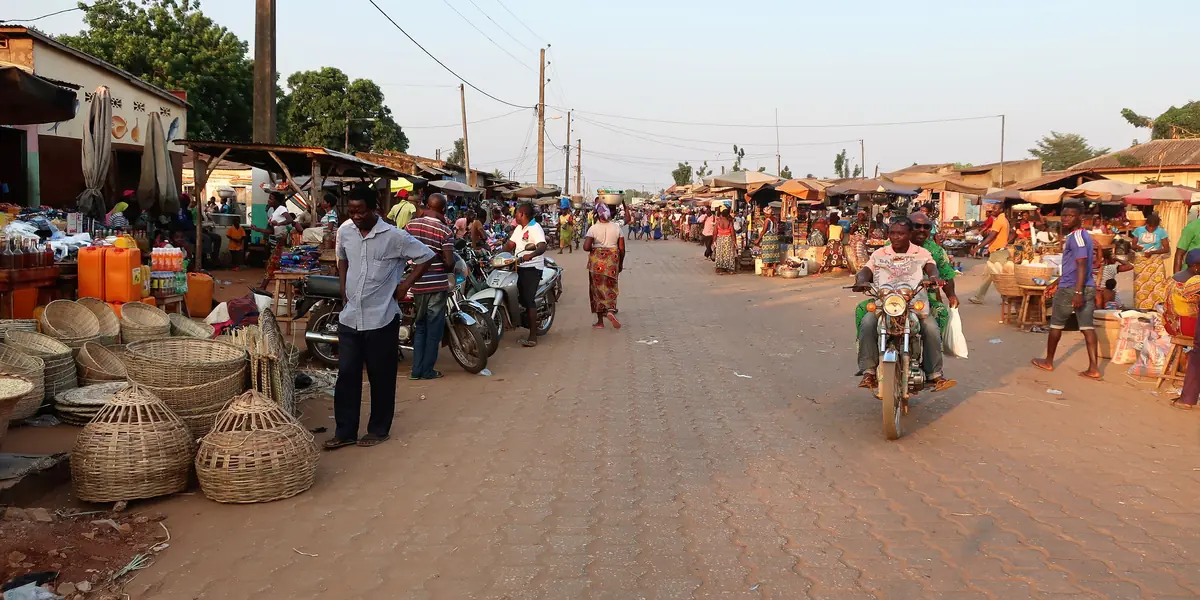
A large market selling fabrics, jewellery and leather goods from the far north. A final chance to socialise before we set off.
In the heart of Borgou
La Gaani transforms Nikki into a living postcard. Golden dust swirled up by the horses’ hooves, the riders’ embroidered tunics, horn trumpets echoing above the corrugated iron roofs. The sultan and his vassal chiefs stand at the centre of the procession, surrounded by griots reciting the kingdom’s genealogy. It is a distillation of living history — eight centuries of Baribara royalty that one can literally take in at a glance.
Nikki
The main square, the palace, the mosque and the market: over the course of three days, the festival takes in all the places that symbolise power and daily life in Nikki.
A grand equestrian parade and the Sultan’s arrival under a royal canopy.
The ceremonial heart of the city — where gifts from vassal chiefs are deposited.
Group opening prayers. Please respect the predominantly Muslim context.
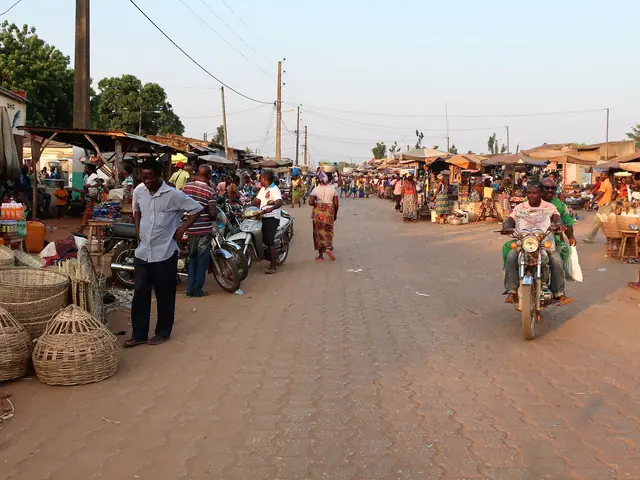
Fabrics, jewellery and leather goods from the north. A highlight in its own right during the trip.
Day after day
The date follows the lunar calendar and changes every year: make sure you check well in advance before setting off.
Collective prayers, the arrival of vassal delegations, the presentation of gifts at the Sultan’s palace.
The Sultan emerges from beneath the canopy, accompanied by horsemen in ceremonial dress, to the sound of the griots’ songs. This is the highlight of the festival.
Communal meals in the huts, evening gatherings, war dances and music played on horn trumpets.
Archery competition, horse dressage, and a market selling fabrics, jewellery and leather goods from the Far North.
The Gaani commemorates a military victory that laid the foundations of the Kingdom of Nikki, and each year re-enacts the vassal chiefs’ oath of allegiance to the sultan. It is not a re-enactment: it is a living continuation of a royal authority that has never ceased to exist, even during the colonial era. The horsemen are the direct descendants of those they represent.
A grand equestrian parade in Nikki’s central square, the Sultan’s arrival under the royal canopy, war dances, archery competitions and sabre demonstrations, community banquets in the concessions, and a market selling fabrics and jewellery from the north. The main ceremony lasts three days, with the highlight taking place on Saturday.
Nikki is 620 km north of Cotonou: allow 8 to 10 hours by road, or a domestic flight to Parakou followed by a 2-hour drive along a dirt track. Accommodation is basic (guest houses, camps) and fills up as soon as the dates are announced. Dahomey Discovery organises a combined Gaani and Pendjari tour every year, which is the most comfortable way to explore the north of the country.
Heading up north
A long journey, hot weather, few places to stay: Gaani requires more preparation than the festivals in the south.
Allow two days’ drive from Cotonou, with a stop-off in Parakou. Alternatively, take a flight from Cotonou to Parakou, then travel by dirt track.
Options are limited to Nikki. Booking is essential, sometimes several months in advance.
A predominantly Muslim environment. Modest dress is appreciated; alcohol should be consumed discreetly.
35–38 °C during the day. A cap, water and sun cream are essential.
There are no cash machines in Nikki. Please withdraw cash in Parakou before continuing.
To Nikki
Wagashi (Peul cheese), Wolof rice, kebabs. Simple, wholesome food, shared straight on the floor.
The security situation in northern Benin is changing — please check the ‘Security’ page on the website and the official advice from your relevant ministry before you travel.
Rough roads and tracks, open-air ceremonies on red sand. Not particularly suitable for people with reduced mobility travelling unaccompanied.
There are no cash machines in Nikki. Please withdraw cash in Parakou (BOA, Ecobank) before continuing north.
Discover the North
Parakou, Pendjari and the waterfalls: the Gaani is the perfect opportunity to explore the north of the country.
A 3–4-hour drive from Nikki. A combined Gaani and safari tour – the best way to explore the far north.
130 km away, the regional capital of Borgou. Central market, regional museum, good logistical base.
Two hours from Natitingou (via Parakou). Waterfalls all year round in the Atacora region.
The sultan’s historic residence, accessible on request — the chef’s presence may sometimes be required.
Before you set off
No — there are no restricted areas, but please check the official safety advisories before travelling to the north.
Not during the parade. After the ceremony, some people are happy to have their photo taken — always ask first.
Entry to the Grand Mosque is restricted to Muslims. The outer courtyard is open, but visitors must wear appropriate clothing.
Accommodation standards in Nikki are modest. For a more comfortable stay, stay in Parakou and make a day trip to Nikki.
Yes, for the public part of the parade and the dancing. Always ask for permission for individual portraits and photos inside the stalls.
Extend into the North
These events are part of the same season or theme. They are best experienced as part of the same trip.
Plan your stay
Every year, our team organises bespoke tours during the event — including airport pick-up, accommodation, transport, a French-speaking guide and access to the programme’s key events.