Ganvié, la cité lacustre du lac Nokoué
©

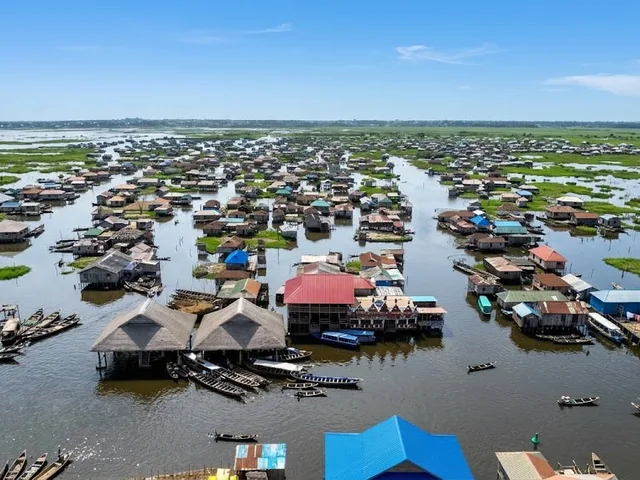
Ganvié, the lakeside town on Lake Nokoué

|

Dr Ondřej Havelka / CC BY-SA 4.0 — Wikimedia Commons

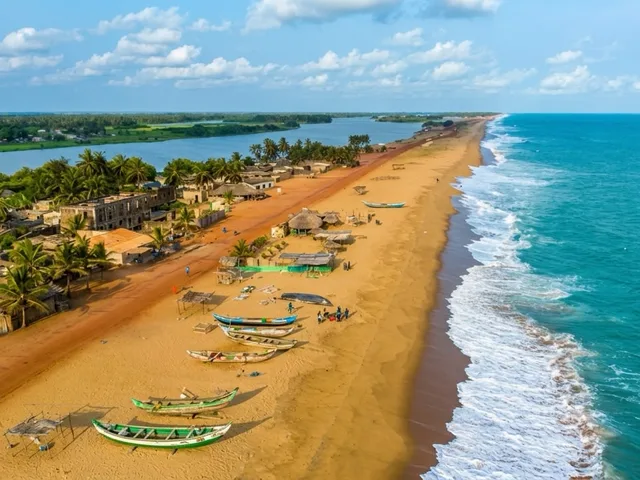
The riches of the coastline

Ganvié, the lakeside town

Benin stretches from the Gulf of Guinea to the Atacora Hills. From the royal palaces of Abomey to the lakeside town of Ganvié and the World Heritage-listed parks in the north, the country boasts a diversity rarely found in West Africa within its compact territory.

Thirty thousand people live on stilts in the middle of Lake Nokoué, where there isn’t a single street. It can be reached by canoe from Calavi, and there one comes to understand the story of a group of refugees who ended up founding a town.

A town born of flight

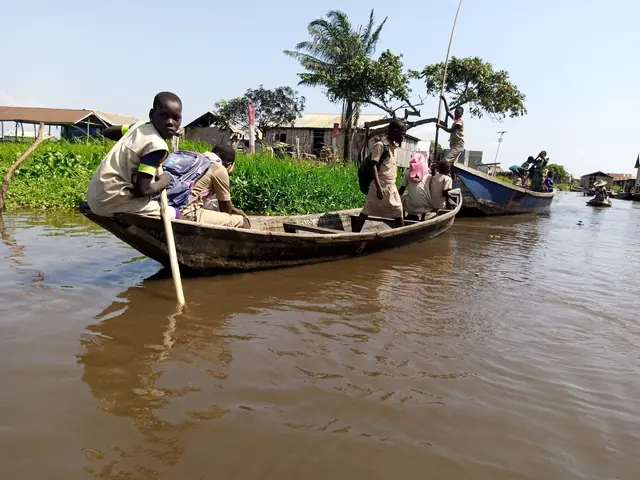
Ganvié lies on the northern shore of Lake Nokoué, about twenty kilometres from Cotonou. There are thousands of wooden houses built on stilts, and no roads: everything is done by canoe, including getting to school.

Tofinu tradition holds that the village originated from an act of flight. Pursued by the warriors of the Danxomè, who captured men for the Atlantic slave trade, families are said to have taken refuge on the lake, beyond their reach. The name bears witness to this memory: Ganvié is commonly translated as ‘the community of those who found salvation’. The idea that the Fon warriors were forbidden to fight on the water is part of the oral tradition; there are no written sources to corroborate it.

The date of its foundation remains unclear: research suggests it was founded between the 17th and 18th centuries, though there are no contemporary documents to confirm this. Benin inscribed Ganvié on its Tentative List of World Heritage Sites on 31 October 1996. On 4 March 2026, the Council of Ministers designated the town as a site of national cultural heritage, explicitly citing population pressure and pollution of the lake.

What you can see from the canoe

The journey begins at the Abomey-Calavi tourist centre, run by the National Agency for Heritage Promotion and Tourism Development (Dahomey Discovery). It takes about half an hour by boat before you reach the first houses.

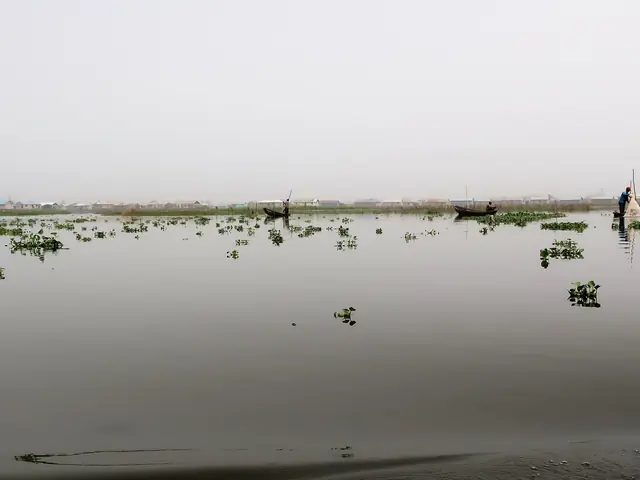
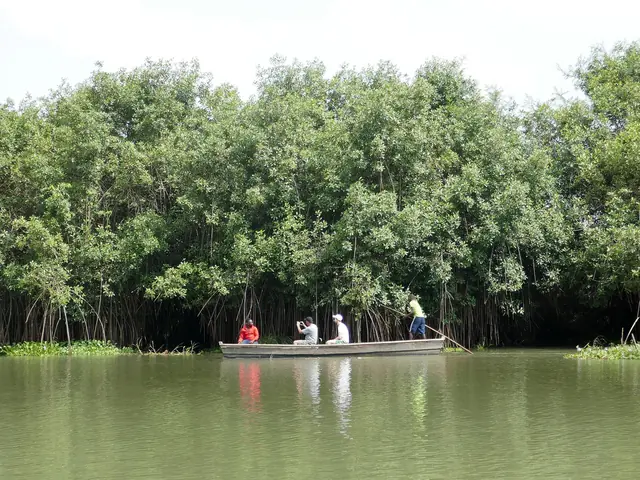
Along the way, rows of branches stuck in the mud: these are the ‘acadja’, submerged enclosures that attract fish, which are then caught with nets. The technique is an ancient one, unique to the region. It is also a subject of debate, as it occupies navigable waterways and consumes wood.

The market takes place on the water, late at night and in the morning, with canoes lined up side by side. That’s the time to aim for. The school, the health centre and places of worship are also built on stilts. Building and maintaining these facilities is expensive: researcher Fèmy Fagla (UQAM) estimates that public investment costs 30 to 50 per cent more than in Benin’s land-based towns.

A city under pressure

The population is no longer that of a village. The districts of Ganvié had a population of 37,172 according to the 2013 census; the municipality of Sô-Ava had 118,497. The figures of between 30,000 and 50,000 inhabitants often cited for Ganvié cover different areas and should be regarded as rough estimates.

As for the water, its quality is deteriorating. The lake is eutrophicated, as evidenced by the proliferation of water hyacinths: nitrogen and phosphorus inputs from the sewage systems of Cotonou and Calavi amount to hundreds of kilograms per day, far exceeding the amount discharged by the Acadja. Monitoring carried out by the IRD and Beninese teams between 2017 and 2020 also shows that the lagoon shifts from fresh to salt water every year, reaching around 25 g/l in April, which displaces species and affects catches. The lake provides a livelihood for some 15,000 fishermen and accounts for a large proportion of the country’s fish production.

Tourism is the third pressure, and the most ambivalent: it brings in money, but it also changes homes and ways of life. A programme funded by the AFD in partnership with the Sô-Ava local council and Dahomey Discovery, launched in 2019, focuses on water, electricity, sanitation and the organisation of tours.

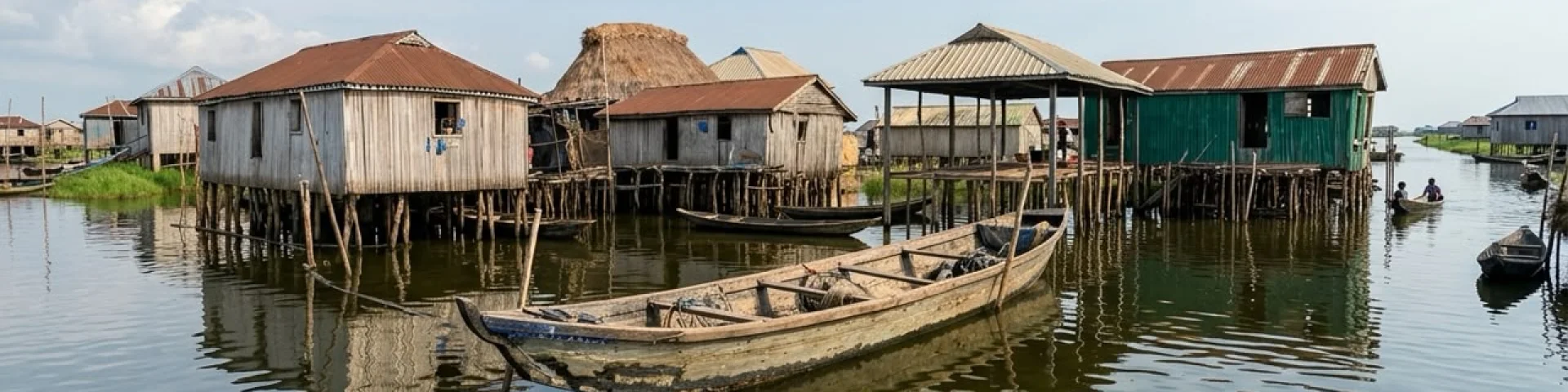
Ganvié, la cité lacustre du lac Nokoué
©

Ganvié, the lakeside town on Lake Nokoué

|

Dr Ondřej Havelka / CC BY-SA 4.0 — Wikimedia Commons

Pirogue sur le lac Nokoué
©

A canoe on Lake Nokoué

|

Adoscam / CC BY-SA 4.0 — Wikimedia Commons

Pêcheurs sur le lac Nokoué
©

Fishermen on Lake Nokoué

|

Kulttuurinavigaattori / CC BY-SA 4.0 — Wikimedia Commons

In practice

  • The districts of Ganvié I and Ganvié II, in the commune of Sô-Ava, in the Atlantique department
  • To get there: the ferry terminal and tourist resort of Abomey-Calavi, about 20 kilometres north of Cotonou, then by pirogue (around 30 minutes)
  • Allow half a day if travelling from Cotonou
  • Best time to visit: the dry season, from December to April; set off early in the morning, whatever the month
  • Good to know: the tours and prices are set by the tourist resort. Pay at the official ticket office rather than through a middleman in the car park, and ask before taking photographs of the locals.