Passport, e-visa, yellow fever vaccination: entering Benin requires three documents and a single official platform.
Here is what government sources say, and the things you need to check again before you set off.

A street in Cotonou
|
Passport, e-visa, yellow fever vaccination: entering Benin requires three documents and a single official platform.
Here is what government sources say, and the things you need to check again before you set off.
Benin has been issuing visas online since 23 April 2018. The official platform is evisa.gouv.bj, run by the Government of the Republic of Benin. This is the only website to use: many commercial sites imitate the homepage and charge additional service fees. Once the application has been approved, the visa is sent by email in the form of a barcode to be printed.
As regards passports, France Diplomatie requires French nationals to have a passport valid for at least six months after their return date, as well as a return ticket. The procedure on evisa.gouv.bj consists of four steps: opening an application, completing the online forms, paying by 3D Secure Visa or Mastercard, and then tracking the application using an application number.
Three options are listed in the fee schedule published on evisa.gouv.bj: 30-day single-entry e-visa, 30-day multiple-entry e-visa, and 90-day multiple-entry e-visa. The fees shown are 50, 75 and 100 euros for an application submitted online by the applicant themselves, and 60, 85 and 110 euros for an application submitted at the embassy. This fee schedule is dated 11 December 2020: please check the current amount on evisa.gouv.bj at the time of your application.
The Beninese government has published a list of exemptions without any requirement for reciprocity. The principle announced is broad: nationals of the 53 African countries may enter Benin and move freely within the country for three months. This covers the fifteen ECOWAS member states and the eight WAEMU member states.
This official document is dated 23 September 2020 and refers to a downloadable list. Bilateral agreements have been signed since then. If your nationality is not listed as part of ECOWAS, please check the current list with the Beninese Ministry of Foreign Affairs before purchasing your ticket.
France Diplomatie is categorical: vaccination against yellow fever is compulsory for entry into Benin; it must be carried out before departure at an approved centre, and the vaccination certificate may be checked on arrival. The WHO list phrases the requirement differently, but Benin itself is classified as a high-risk country and checks at Cotonou are common. Get the vaccination – no ifs, ands or buts.
Since 11 July 2016, the validity of the international yellow fever vaccination certificate has been extended from ten years to a lifetime, in accordance with the revised Annex 7 of the International Health Regulations. An old vaccination certificate therefore remains valid.
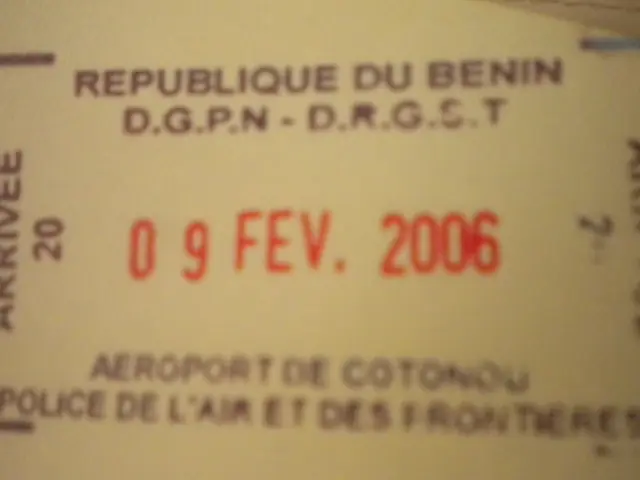
On arrival, please present your passport, the printed e-visa barcode, your vaccination record and your return ticket. Cotonou Airport, long known as Cardinal Bernardin Gantin de Cadjèhoun International Airport, was renamed in December 2025: its official website now refers to it as Bernardin Gantin de Cotonou Airport. Both names are still in use.