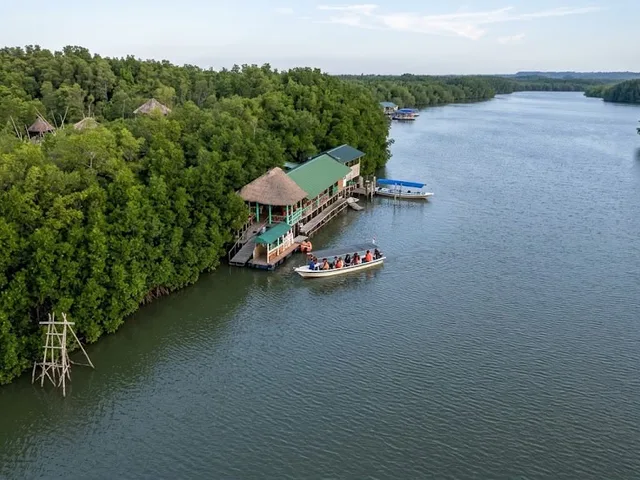
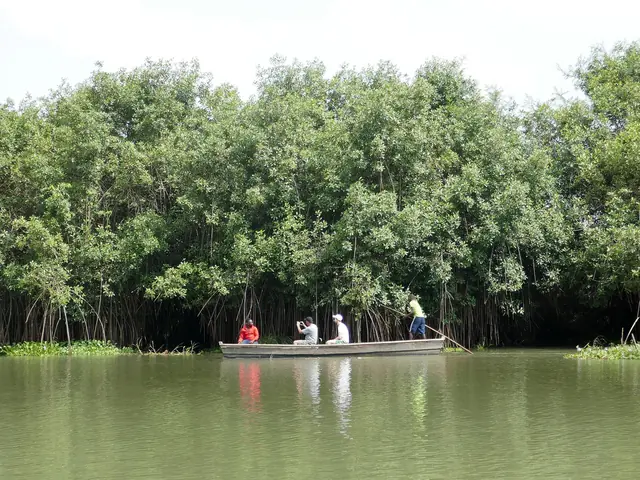
Le lac Ahémé
©

Ahémé Lake

|

Rachad Sanoussi / CC BY-SA 4.0 — Wikimedia Commons

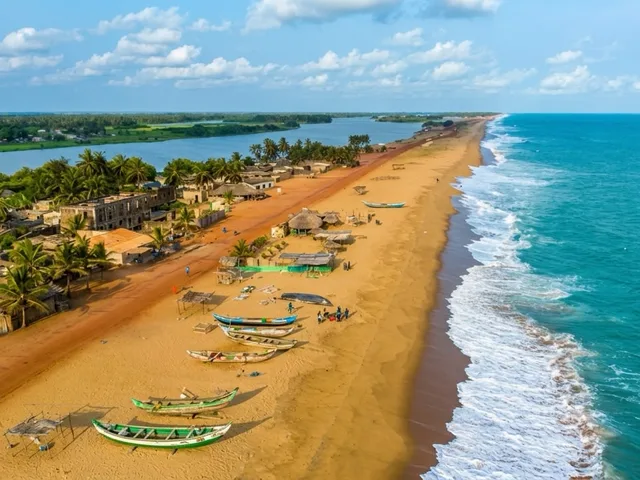
The riches of the coastline

Nokoué Lake: waters in flux

Benin stretches from the Gulf of Guinea to the Atacora Hills. From the royal palaces of Abomey to the lakeside town of Ganvié and the World Heritage-listed parks in the north, the country boasts a diversity rarely found in West Africa within its compact territory.

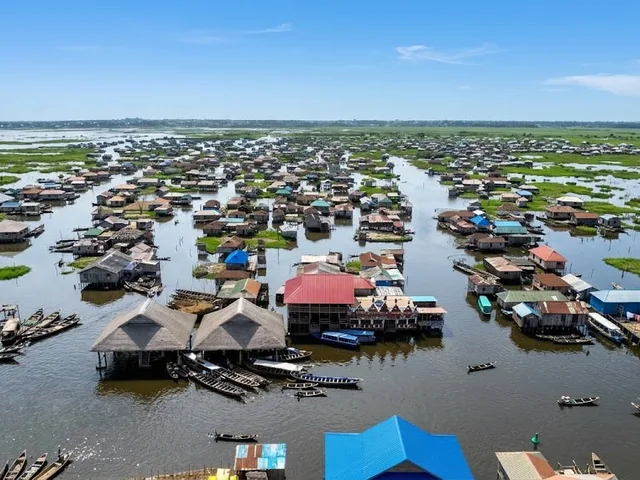
Every year, Benin’s largest body of water changes from fresh water to salt water, and then back again. This cycle shapes fishing, the villages built on stilts and the view from the canoe.

A lake whose water is renewed twice a year

Nokoué lies to the north of Cotonou and covers an area of approximately 150 km². It is very shallow, averaging around 1.3 m. Two rivers feed into it from the north: the Ouémé and the Sô. It is connected to the ocean by a single channel, the Cotonou Channel.

This system results in an annual cycle. Monthly salinity monitoring carried out from December 2017 to December 2020 illustrates this pattern. From May to November, river inflows cause salinity to fall, reaching zero in October and November. From December to April, the tide pushes seawater through the channel and salinity peaks at around 25 in April. The lake is therefore a brackish lagoon for half the year and a freshwater body for the other half.

The shift is not the same from one year to the next. The same studies show an average salinity of around 25 in April 2018 and 2020, compared with 16 in April 2019. A variation of 10 to 15 m³/s in river flow is enough to shift the balance.

The ‘akadja’: an ancient technique and a subject of controversy

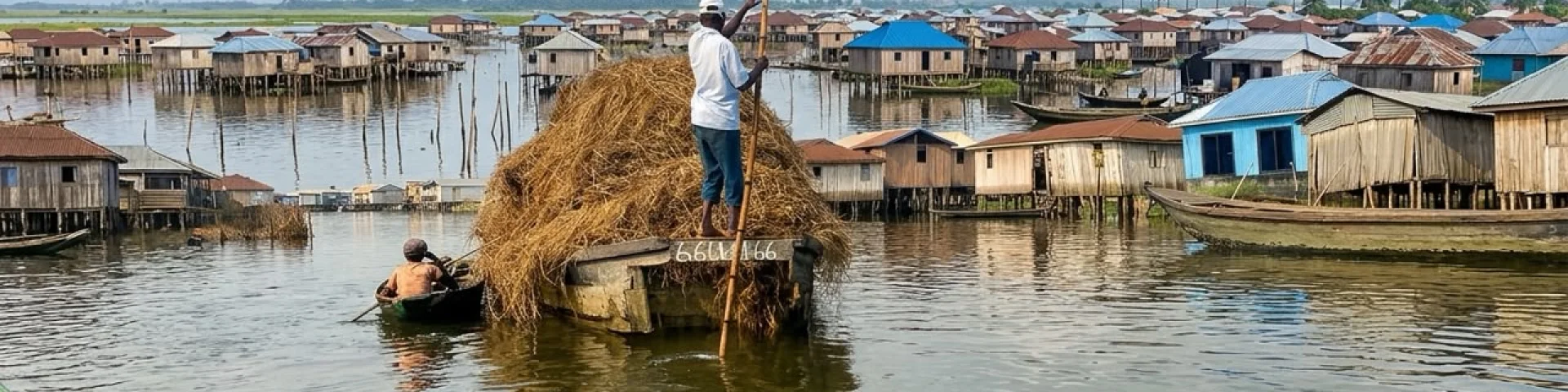
An ‘akadja’ is a fish trap: branches placed at the bottom of the lake, which become covered in algae and micro-organisms and attract fish, which are then caught with a net. It is a traditional local technique.

It is also a contentious issue, and the disagreement is stark. The fisheries authority regards this as a form of lake filling: it estimates that 25 to 50 tonnes of wood are introduced per hectare of acadja. Law No. 2014-19 of 7 August 2014 on fisheries and aquaculture prohibits this under Article 73. Fishing communities oppose this: without acadja, they say, the fish lose their shelter.

Scientific research does not present a clear-cut picture. A 2010 study of Lake Nokoué found 25 species of fish in the acadja out of the 51 recorded in the lake, with a clear bias towards cichlids.

Eutrophication, water hyacinths and biological rest periods

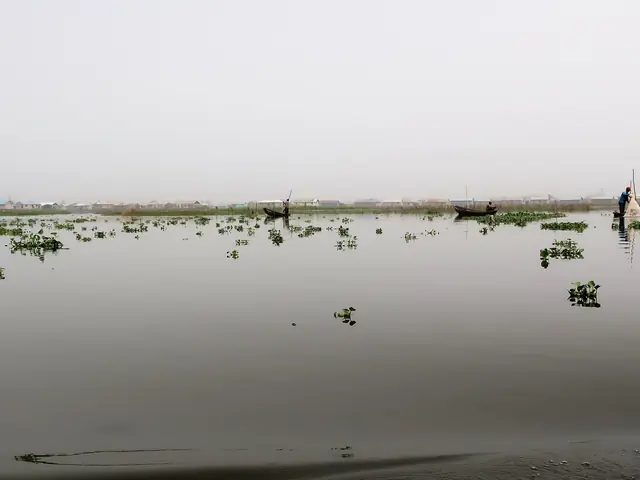
The lake receives wastewater from an urban area with a population of over one million. An assessment published in 2016 classifies its waters as hyper-eutrophic: low dissolved oxygen, high levels of phosphorus and chlorophyll. The mats of water hyacinths you will come across are the visible result of this imbalance.

Something to bear in mind before you come. The fisheries management authority now imposes biological rest periods during which all fishing is prohibited on Lake Nokoué, the Porto-Novo lagoon and their channels. The lake remains navigable, but you won’t see any fishing taking place. The dates change every year: check before you set off.

Le lac Ahémé
©

Ahémé Lake

|

Rachad Sanoussi / CC BY-SA 4.0 — Wikimedia Commons

Ganvié, la cité lacustre du lac Nokoué
©

Ganvié, the lakeside town on Lake Nokoué

|

Dr Ondřej Havelka / CC BY-SA 4.0 — Wikimedia Commons

Pêcheurs sur le lac Nokoué
©

Fishermen on Lake Nokoué

|

Kulttuurinavigaattori / CC BY-SA 4.0 — Wikimedia Commons

In practice

  • The Atlantic, Littoral and Ouémé departments, north of Cotonou
  • How to get there: from Calavi jetty to Ganvié and Sô-Ava
  • Allow half a day for a crossing including a stop at a lakeside village
  • Best time: December to March, for low water levels, dry weather and active fish
  • Good to know: check the current fishing moratorium dates. Outside these periods, set off early: the nets are hauled in early in the morning, and the wind stirs up an unpleasant chop in the afternoon.